Reflections from the Panel: The Future of Earth System Modeling in the Era of AI
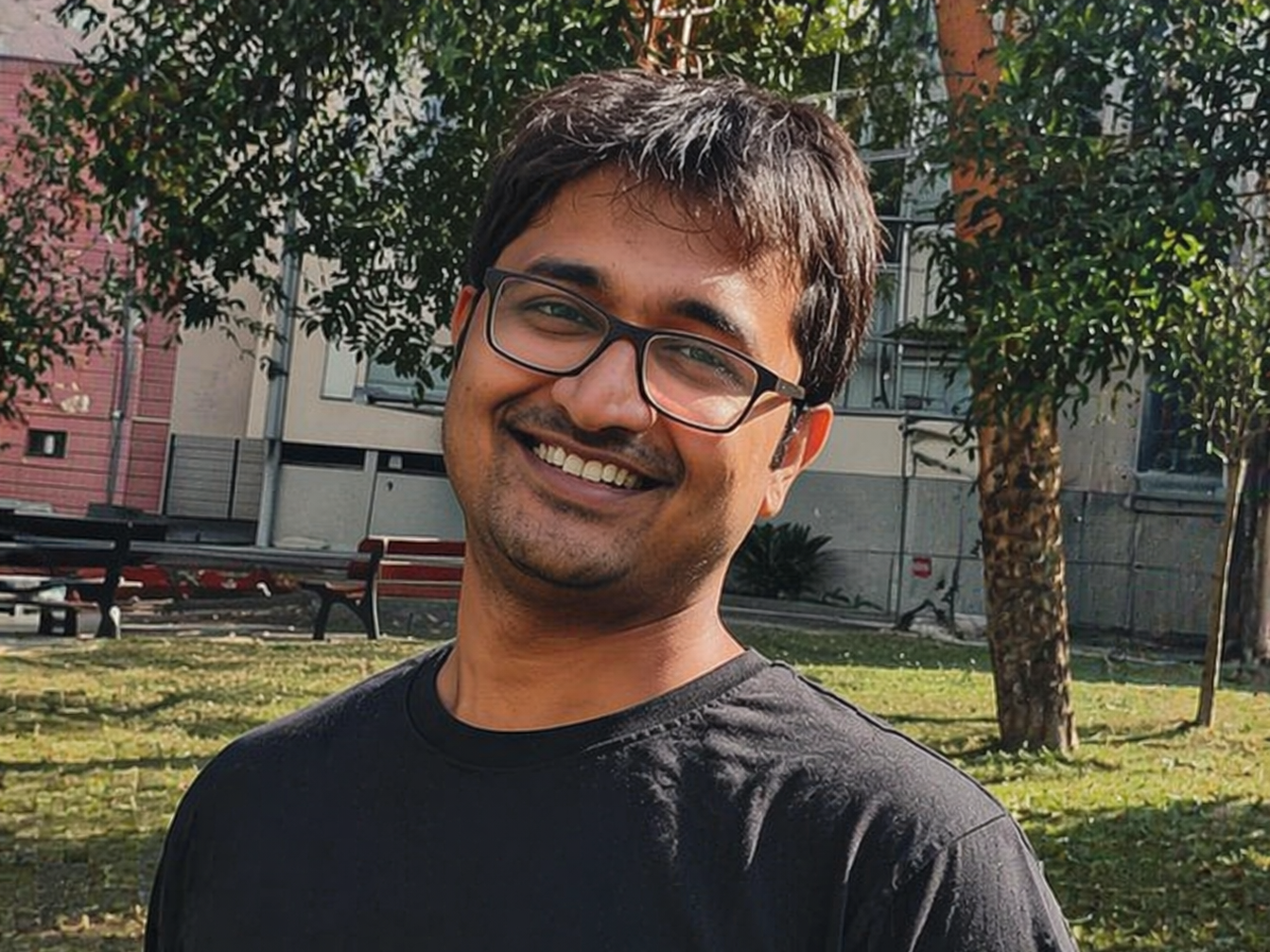
As part of the Machine Learning for Earth System Modeling training course, I had the pleasure of moderating a panel discussion on “The Future of Earth System Modeling in the Era of Artificial Intelligence.” The discussion brought together perspectives from ECMWF, Forschungszentrum Jülich, the University of Oxford, and KNMI, spanning machine learning, numerical modeling, climate physics, ocean modeling, and operational forecasting.
The central question was not simply whether AI will replace traditional Earth system models. Rather, the discussion made clear that the future will likely be shaped by a much richer interaction between data-driven models, physics-based simulations, hybrid approaches, and human expertise. AI weather models have already shown impressive skill, especially in medium-range forecasting. Still, Earth system modeling poses deeper challenges: scale coupling, feedbacks, physical consistency, extrapolation to unseen climates, and the question of trust.
A recurring theme was that strong forecast scores alone are not enough. For weather applications, a model may still be useful even if some physical processes are imperfectly represented, provided its limitations are well understood. For climate applications, however, relaxing physical consistency becomes much harder. Conservation laws, feedbacks, cloud processes, and boundary-condition changes matter profoundly when models are expected to reason beyond the observed present-day climate.
The panel also discussed whether AI models can support scientific discovery. I found this part especially interesting. AI models are often described as “black boxes.” Still, the discussion highlighted a more nuanced view: if carefully probed, observations and simulations may reveal relationships that traditional analysis could miss. At the same time, what an AI model can teach us depends strongly on what it was trained on. A model trained mostly on model output may reveal properties of that model world; a model trained more directly on observations may bring us closer to understanding the real Earth system.
Another important point was evaluation. The community needs to move beyond bulk error metrics such as RMSE and develop process-level, structure-aware, and physically informed diagnostics. This is particularly important as both kilometer-scale simulations and AI models begin to represent spatial structures directly. Clouds, storms, circulation regimes, and extremes contain rich physical information that can be lost when everything is averaged away.
From a moderator’s perspective, I think the discussion reinforced that AI is not merely a faster replacement for existing models. It is changing the questions we can ask, the data we can use, and the ways we may evaluate realism and usefulness. But it also forces us to be more explicit about trust: trust for which variable, which process, which time scale, and which application?
The future of Earth system modeling will probably not be defined by a single winning approach. Instead, it may involve a family of models: physics-based systems, pure AI models, hybrid models, component models, foundation models, and operational workflows where expert judgment remains essential. The challenge ahead is to make these tools not only skillful but also interpretable, physically meaningful, and scientifically useful.
A recording of the panel discussion is available on YouTube: